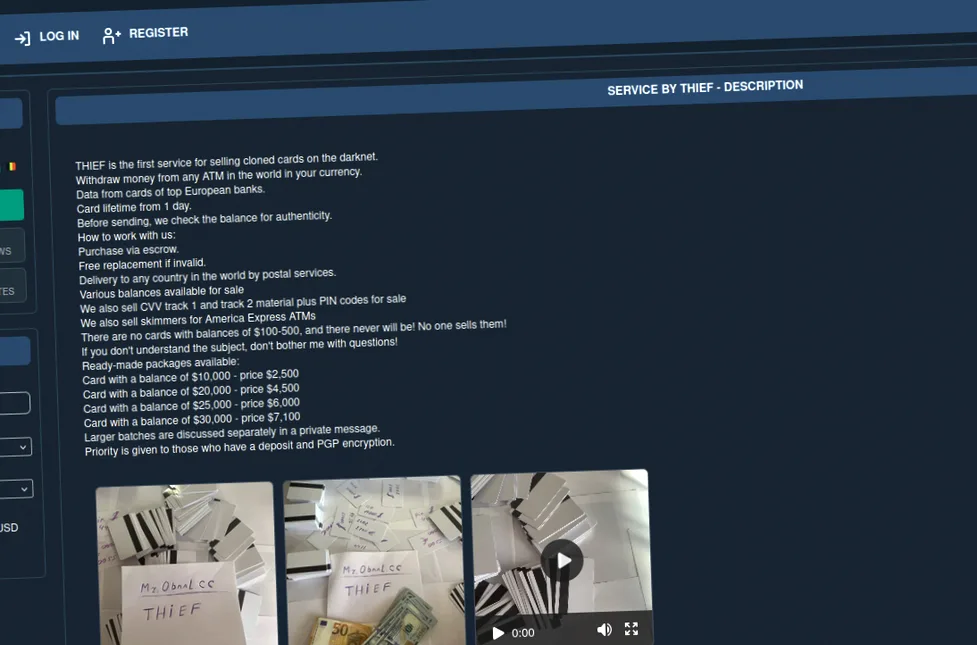
Mark T.'s situation highlights the serious repercussions linked to anonymous transactions on the darknet. This account centers on the digital evidence, investigative methods, and activities that resulted in his arrest, steering clear of a general discussion about carding practices.
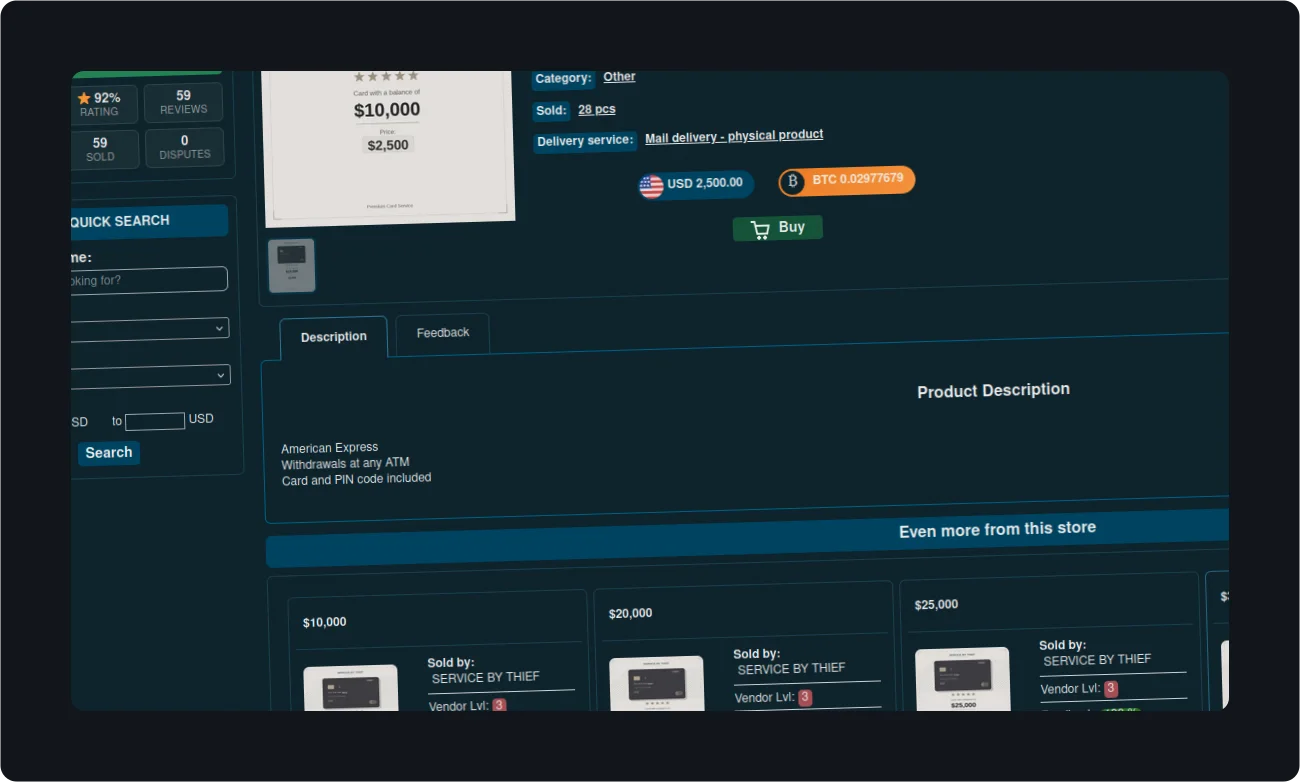
At 34 years of age, Mark believed he had discovered an easy route to financial gain. In November 2024, he used $480 in cryptocurrency to buy six cloned debit cards, complete with PINs, from a darknet vendor. These cards contained stolen magnetic stripe data, a typical commodity in the carding industry.
Initially, he was able to withdraw $4,200 from three separate ATMs. However, his attempt at a fourth withdrawal signaled the conclusion of his illegal endeavors. This scenario exemplifies how law enforcement effectively employed various forms of evidence to apprehend a suspect within just 72 hours, highlighting the critical role that ATM surveillance and digital forensics play in such investigations.
What is the process of carding?
Carding is a term that denotes the unlawful collection and use of stolen financial data, representing a critical issue in the realm of cybercrime. Mark's technique illustrates typical methods linked to carding:
Initially, magnetic card track data (Track 1 and Track 2) is retrieved by offenders through various methods. These methods may include skimming devices affixed to ATMs, shimmer devices aimed at chip cards, phishing schemes, or acquiring compromised information from illicit online sources.
Blank plastic cards are used to transfer the extracted data after the theft, with modifications made to mimic authentic cards by incorporating details such as the name of the cardholder, the expiration date, and the card number.
PIN Code Acquisition: When the PIN is collected—often through overlay keypads or concealed cameras at ATMs—the criminal secures access to a card that allows for cash withdrawals.
Withdrawal of Funds: The individual can then utilize the ATM to extract cash before the legitimate account owner becomes aware of the fraudulent activities and takes steps to block the card.
To obscure the source of the funds, cash that has been withdrawn is often converted into cryptocurrency, typically facilitated by a Bitcoin ATM or via a peer-to-peer exchange.
Mark acquired his cards from a darknet marketplace, choosing Monero for its enhanced privacy features. The items were dispatched in unmarked packaging to ensure confidentiality. It is essential to understand that beyond dispensing cash, modern ATMs function as advanced surveillance systems that gather evidence.
How do ATMs contribute to investigations?
An ATM functions beyond merely dispensing cash; it serves as a crucial tool for surveillance and evidence gathering. Modern ATMs incorporate various features that are vital for monitoring user activity and collecting pertinent data:
Front Camera: This feature captures images at an impressive 1080 resolution, often enhanced with infrared capabilities for improved visibility during nighttime or low-light conditions, thereby making it challenging for individuals to remain undetected.
Hidden Camera: Many ATM models are designed with a discreet camera positioned to capture perspectives that the primary camera might overlook, which helps in identifying people attempting to avoid recognition.
Critical information regarding every ATM operation, such as the transaction status, ATM ID, card number, amount, and time, is thoroughly documented. Such information is invaluable in investigations concerning possible skimming activities.
Geolocation Data: The ATM logs its exact geographical location and communicates this information to the financial institution, thus providing a comprehensive record of where transactions take place.
Network Activity Records: All interactions with the bank's processing systems are logged, including critical metadata related to the network connection.
Imagine a situation where Mark utilized an ATM in a suburban area of Tampa Bay without any attempts at disguise. His activities were effectively captured by the frontal camera as he exited the location after withdrawing $700 and retrieving his card. The 23-second video footage obtained served as a significant aid for identity verification. Such examples underscore the necessity of understanding ATM skimming methods and being aware of the potential presence of skimming devices.
Criminals frequently misjudge the extent of anonymity they possess online, mistakenly believing it transfers to their physical appearances at ATMs. In reality, ATMs function as settings where online crimes yield tangible evidence, thereby considerably reducing anonymity at the moment of transaction.
What was the investigation timeline?
The timeline of the investigation into Mark T.'s activities progressed swiftly:
Day 1 (November 2024): Concerns were raised by three individuals in states including Florida, Georgia, and North Carolina regarding unauthorized withdrawals from their accounts. In response, the respective banks froze the impacted cards and initiated fraud alert measures.
Day 3: The banks' fraud detection systems identified a troubling pattern of numerous rapid withdrawals using cloned cards across several states, prompting the bank's internal investigation team to take action.
Involved in the situation on Day 5 was the U.S. Secret Service, which is a federal agency that focuses on financial crimes. Access to transaction logs and surveillance video from the ATMs linked to the suspicious withdrawals was requested by an analyst from this agency.
Video footage captured at an ATM on Day 8 provided a clear image of Mark, which, when cross-referenced with his identification information from the Florida Department of Public Safety, indicated that he had no previous criminal record. It was found through analysis that all unauthorized cash withdrawals occurred at locations situated within a distance of 40 miles from his residence.
Investigators obtained a warrant on Day 12 to analyze Mark's digital activities, which involved examining records from his Internet Service Provider, his browsing history, and transactions related to his cryptocurrency wallet. During the fraudulent card activities, ISP records suggested access to Tor exit nodes, which linked a darknet marketplace account to the Monero wallet after a court order was issued for the cryptocurrency exchange.
At Mark's home on Day 14, law enforcement uncovered $3,200 in cash, a laptop that indicated participation in darknet activities, a device capable of reading and writing magnetic stripes, and six blank plastic cards while executing a search warrant.
During questioning on Day 15, it was revealed by Mark that he had purchased the cards and withdrawn cash from four of them, while the other two had been rendered unusable due to being blocked by the banks.
This investigation timeline illustrates the effectiveness of fraud detection systems and the timely actions taken by law enforcement to address financial crimes.
What were the financial and legal consequences?
Mark T. found himself in hot water, facing serious legal and financial repercussions from his illicit actions, as detailed in the breakdown below:
| Item | Value or Range |
|---|---|
| Supervised release period | 3 years |
| Total cash-outs | 4 |
| Federal incarceration duration | 5 years (60 months) |
| Time from first cash-out to arrest | 15 days |
| Cost of fake cards | $480 |
| Total amount taken out | $4,900 |
| Fines and restitution | $22,000 |
This case illustrates the grave ramifications associated with engaging in illicit activities related to card cloning or skimming. Although the initial financial outlay was minor, the eventual repercussions were extensive.
We won't name the website where the purchase was made, but the connection was clear.
Why didn't cryptocurrency ensure anonymity?
Mark chose Monero to finance the acquisition of cloned debit cards. However, law enforcement was able to connect him to the financial activities. Several significant weaknesses in his security protocols were uncovered:
Monero was acquired by Mark through a regulated exchange, which required him to undergo Know Your Customer (KYC) verification and submit personal identification documents. Subsequently, a court order mandated this platform to disclose his identity and transaction details. While tracking the subsequent movements of Monero can be complex, the specifics of the purchase became crucial evidence against him. This situation underscores the need for consumer protections against the threats posed by card skimming and the dangers of acquiring such tools.
Within a short span of two weeks, the entire series of events unfolded, which included acquiring Monero, obtaining cards from a darknet marketplace, receiving those cards, and making cash withdrawals at ATMs. The timing of these actions constituted significant circumstantial evidence.
Physical Evidence: During a raid at his home, investigators found cloned cards with magnetic strips that matched data from actual victims. This represented undeniable evidence that cryptocurrency transactions could not hide. Avoiding traces that skimming device detectors can identify is crucial.
Surveillance Footage: Cameras installed at the ATMs captured Mark’s image, providing irrefutable proof linking him to the withdrawals. Even if other investigative aspects were flawed, this video evidence would have sufficed to connect him to the crime. This emphasizes the importance of being aware of skimming devices and their potential to gather evidence against individuals, even if they are unaware of their existence.
These elements collectively demonstrate how operational lapses can result in detection during illicit activities.
What were Mark's operational errors?
Mark made several notable mistakes during his operations:
He completed all four cash withdrawals from ATMs that were located in a radius of 40 miles around his residence. Such limited geographic dispersion can raise alarms in fraud detection systems, which are programmed to identify atypical behavioral patterns.
Identity Exposure: He did not endeavor to conceal his identity during these transactions. As a result, his image was clearly recorded on surveillance cameras, enabling law enforcement to identify him easily using public records.
Centralized Exchange for Cryptocurrency Acquisition: Mark acquired Monero via a centralized exchange that mandated KYC verification, unintentionally associating his real identity with the cryptocurrency used in illicit transactions on the dark web. This undermined the privacy often attributed to Monero.
A laptop, which contained records of his activities on the dark web and usage of the Tor Browser, was among various incriminating items discovered by law enforcement during a search, alongside an MSR device and blank cards. Attempts to erase files, like traces from the Tor Browser or update logs, could still leave recoverable evidence, which is a significant error in cases involving card cloning or related crimes.
Cash Discovery: The $3,200 in cash located in his residence matched the usual denominations dispensed by ATMs, further connecting him to criminal activities. This seemingly trivial detail added more evidence against him.
Withdrawal Timing: The transactions were carried out within a two-week span. If he had distributed these withdrawals over a longer period, it might have lessened the chances of triggering fraud alerts, although his image would still have been captured by ATM cameras.
These operational errors demonstrate how critical attention to detail and strategic planning are in avoiding detection.
What lessons emerged from Mark T.'s case?
Mark T.'s case underscores the critical role of integrated security systems—combining physical surveillance with digital forensics—in combating financial crime. His experience highlights that perceived anonymity in the digital realm does not extend to physical transactions. For consumers, heightened awareness regarding credit card skimmer protector devices and general card skimming protection remains essential.
His arrest and conviction serve as a stark reminder that even with seemingly anonymous cryptocurrencies and darknet transactions, the points where digital actions intersect with the physical world create vulnerabilities that law enforcement can exploit. These vulnerabilities, often underestimated by perpetrators, ultimately lead to identification and prosecution.
Sources
[1] Credit Card Skimming | Georgia Attorney General's Consumer Protection Division
[3] ATM & POS Terminal Skimming
[4] Beware of ATM, Debit and Credit Card ‘Skimming’ Schemes | FDIC.gov